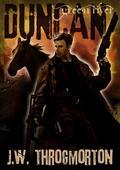
2010Global warming, an earth killer asteroid, World War III, or even a great plague, but no one expected the total collapse of the world's economy, or that it would be the mechanism for the decline of the world's civilizations. Bank closings soon became epidemic. The ones that did not initially close stopped lending. Without capital, businesses failed and unemployment soared. The world's governments continued printing money trying to keep their economies afloat, but in the end, their currencies lost all value. Finally, precious metals and gems became worthless. Only things that people could eat, drink, or wear had value. Hoarding food became essential and salt became the currency for trade. The Decline, at its beginning, spread from city to city unnoticed. One city service stopped and then another until eventually water and electricity failed and firefighters, police, and hospitals stopped responding. Once the violence began, it could not be stopped. Industrial civilizations of the world have declined to a version of Europe's dark ages. Basic education survives, but higher learning, especially the sciences, is lost to the senseless violence after The Decline. Yet, for some there remains a belief that a new renaissance will emerge from the world's lost knowledge. It lies dormant; waiting.2050Young Josh Duncan leaves his family to fulfill his childhood dream of seeing the Pacific Ocean. Traveling west from Denver, he stops at Green River to trade for salt and encounters man's inhumanity to man. Helping his new friends deal with Blackburn, and The-man-with-no-name transforms him from a helpful, easy-going youth to a hardened, fast acting man capable of killing without remorse.

Thumb

0 repins 0 comments

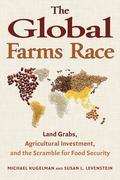
As we struggle to feed a global population speeding toward 9 billion, we have entered a new phase of the food crisis. Wealthy countries that import much of their food, along with private investors, are racing to buy or lease huge swaths of farmland abroad. The Global Farms Race is the first book to examine this burgeoning trend in all its complexity, considering the implications for investors, host countries, and the world as a whole. The debate over large-scale land acquisition is typically polarized, with critics lambasting it as a form of "neocolonialism," and proponents lauding it as an elixir for the poor yields, inefficient technology, and unemployment plaguing global agriculture. The Global Farms Race instead offers diverse perspectives, featuring contributions from agricultural investment consultants, farmers' organizations, international NGOs, and academics. The book addresses historical context, environmental impacts, and social effects, and covers all the major geographic areas of investment. Nearly 230 million hectares of farmland-an area equivalent to the size of Western Europe-have been sold or leased since 2001, with most of these transactions occurring since 2008. As the deals continue to increase, it is imperative for anyone concerned with food security to understand them and their consequences. The Global Farms Race is a critical resource to develop that understanding.

Thumb

0 repins 0 comments

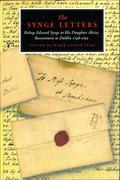
Edward Synge wrote 221 letters to Alicia, his daughter, betweeen May and October of 1746 to 1752. He was an adoring though not uncritical father, advising, gossiping and instructing her from his country estate. Synge was a wealthy man and Alicia a considerable heiress; his concern about her need to marry well and her motherless condition is a running, if tacit, theme of the letters. While writing of his life in the diocese, he counsels Alicia on her conduct and mode of life in Dublin; deals with manners and reading matter; with food (how to make good bread) and drink; discusses the false modesty of women and menstruation. He advises her about how to talk to doctors and on matters of taste, house-building and decoration; instructs her on methods of dealing with Dublin tradesmen, the upkeep of his garden and the correct way to plant a border. Throughout this correspondence he describes his Roscommon neighbours and life in the Irish provinces in fascinating detail. These vivid, wide-ranging and sympathetic letters from father to daughter open a window onto social and domestic life in the mid-eighteenth century, revealing lost worlds with the illumination of a Vermeer or a Montaillou. Immediate and richly detailed they constitute a major new source for the history of eighteenth-century Ireland and - in a great age of letter-writing - form an exciting contribution to that most intimate of genres. The letters are fully annotated and accompanied by a biographical register, maps, index, bibliography, and appendix on Synge property and wealth. They will delight the scholar and general reader alike. 'Here, suddenly I felt, was the most extraordinarily revealing and sympathetic historic document that I had encountered in 25 years of research. I reached the end of the correspondence with the feeling that I had entered and understood a culture in the same way as if I had read one of the best epistolatory novels on the 18th century. thanks to the high and calculated litera

Thumb

0 repins 0 comments

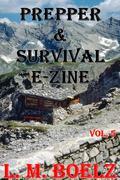
In this issue I have added more information to help with the task of living off grid, keeping up moral with body care and cleaning ideas. along with how to make an outhouse less uncomfortable. Of course I still touched on food, water and safety around lakes, rivers and even the ocean. Since sit is summer being out with nature or while bugging out you could find yourself having to deal with crossing bodies of water. The next issue will cover a lot more on herbal remedies and first aid.

Thumb

0 repins 0 comments

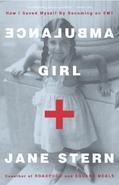
Five years ago Jane Stern was a walking encyclopedia of panic attacks, depression, and hypochondria. Her marriage of more than thirty years was suffering, and she was virtually immobilized by fear and anxiety. As the daughter of parents who both died before she was thirty, Stern was terrified of illness and death, and despite the fact that her acclaimed career as a food and travel writer required her to spend a great deal of time on airplanes, she suffered from a persistent fear of flying and severe claustrophobia. But a strange thing happened one day on a plane that was grounded at the Minneapolis airport for six horrible, foodless, airless hours. A young man on a trip with his classmates suddenly became dizzy and pale because he hadn't eaten in many hours, and there was no food left on the plane. Without thinking about it, Jane gave him the candy bar that she had in her purse. A short time later the color had returned to his cheeks, the boy was laughing again with his friends, and Jane realized that this one small act of kindness-helping another person who was suffering-had provided her with comfort and a sense of well-being. It was shortly thereafter that this fifty-two-year-old writer decided to become an emergency medical technician, eventually coming to be known as Ambulance Girl. Stern tells her story with great humor and poignancy, creating a wonderful portrait of a middle-aged, Woody Allen-ish woman who was "deeply and neurotically terrified of sick and dead people," but who went out into the world to save other people's lives as a way of saving her own. Her story begins with the boot camp of EMT training: 140 hours at the hands of a dour ex-marine who took delight in presenting a veritable parade of amputations, hideous deformities, and gross disasters. Jane-overweight and badly out of shape-had to surmount physical challenges like carrying a 250-pound man seated in a chair down a dark flight of stairs. After class she did rounds in the emergency room of a

Thumb

0 repins 0 comments

The book deals with poverty as one of the most serious and urgent issue in our modern time. Partly because Poverty is the essence of all other social illnesses and partly because of its direct influence over human security system in a world accelerating towards global and international common human rights values. The book addresses the current poverty reduction plans that proved to be inefficient and controversial, these plans made poor nations in their attempt to escape poverty net, they find themselves trapped in a well woven poverty net and became more dependent than ever in their everyday food and human needs. All the known institutions like the WB, IMF, Development Banks as well as aid organs worked under the Washington Consensus ready-made recipe in granting their preconditioned aid, let alone some subvention measurement protected by local legislative system in rich and donating nations. Poverty becomes a threat to the economic development in rich nations as well and for the time being a security one. The book will explain and reason the way poverty is developing in the world and suggest some solutions and compromises needed to solve this issue.

Thumb

0 repins 0 comments

This fully updated edition of The Detox Diet guides readers through the detoxification process and follow-up cleansing programs developed by Dr. Elson Haas for those struggling with addictions to sugar, caffeine, nicotine, and alcohol.■ Do you overeat? Or are you overweight without overeating? ■ Are you often tired or fatigued without knowing why? ■ Do you consume caffeine and sugar to get through the day? ■ Do you suffer from sinus headaches or chronic nasal congestion? ■ Do you experience constipation, heartburn, or indigestion? ■ Do you have high blood pressure or elevated blood cholesterol? ■ Do you smoke and have you tried unsuccessfully to quit? ■ Do you consume alcohol daily or in large amounts? ■ Do you use nonprescription, prescription, or recreational drugs regularly? If you answered yes to any of these questions, Dr. Elson M. Haas can help you regain vitality and start you on a new path to lifelong vibrant good health with his safe, effective detoxification and cleansing program. Fully updated and expanded, the third edition of The Detox Diet offers a variety of fasting and juice-cleansing options, fifty deliciously satisfying follow-up recipes, and specially designed menu plans, whether you're struggling with sugar, caffeine, nicotine, alcohol, or common chemical sensitivities. Dr. Haas has added an important new chapter dedicated to teens about simple detox activities plus guidelines for dealing with weight and blood sugar issues, eating disorders, body image concerns, and substance abuse. He also answers the most frequently asked question from parents: "Is fasting safe for my teenage daughter or son?" Also included is a fast-food replacement chart; an elimination regimen that zeros in on specific dietary culprits; easy-to-follow detoxing directions that maintain teen-essential protein; and a modified juice-cleansing program developed for this age group. This practical, authoritative book provides val

Thumb

0 repins 0 comments

Welcome to the idea of raising your vittles in your own backyard, as told to me by my neighbor, Buford. Now Buford has been known to tell a well stretched tale now and then, but the fact he gets meat and vegetables from the same space is the real deal. We're not talking about corn and potato plants in a garden. This is the world of aquaponics-where you raise fish and plants all at the same time. Aquaponics combines the food production techniques of aquaculture, which is the practice of raising fish in tanks, with hydroponics, or the farming of plants in water. Aquaponics uses the excrement from fish (what Buford calls "fish poo") and uneaten fish food, breaks this material down with nitrogen-fixing bacteria and feeds the resulting fish fertilizer to plants growing in the same water containing the fish poo. It's a great deal, because the organic matter resulting from growing fish in a confined space would normally kill the fish if it continued to accumulate. Water is removed and replenished with fresh water on a daily basis in aquaculture practices. That's the downside of aquaculture. Raising plants in water, or hydroponics, requires vast amounts of nutrients that have to be added to the water on a daily basis. Aquaponics turns these two bad things into a plus by combining the two practices. Fish poo, from aquaculture, goes through what's called a "biofilter," where it's turned into a fertilizer that is then soaked up by plant roots that are sitting in the same water, which makes the plants grow green and strong.

Thumb

0 repins 0 comments

Mmmmh…wie das duftet!" Wenn das kein guter Deal ist: gleich 100 Gratin Rezepte und das dann noch mit dem Dr. Oetker-Rundum-Sicherheits-Gefühl, denn alle Rezepte sind mit ca. 85 Fotos ausführlich dargestellt, verständlich geschrieben und verlässlich getestet. Gratins gelingen im Ofen ohne Probleme - probieren Sie es doch gleich mal aus! Alle Geschmacksrichtungen finden Sie zusammengefasst in der Printversion 1000 Ofengerichte"- dieses Kapitel ist eines von zehn Auszügen.

Thumb

0 repins 0 comments

Be thankful for today every day. We can only live today, not yesterday again, not yet tomorrow. Remind yourself how precious today is. It will go by fast, so don't squander it. Look around you and live in the now. Born on Valentine's Day in 1939, author Bernard Wysocki has had a love affair with life. Though it wasn't all roses and champagne, he has met each challenge with wit and wisdom. Bernard's memoir, Learn to Live, Love, Laugh, is part recollection, part philosophy, and part narrative. In part one, Bernard shares stories of his early years growing up in Chicago, of how he met Jesse Owens in 1951, of his road trip to Florida after high school, and several other heartwarming adventures. Part two reveals Bernard's down-to-earth beliefs on what he has learned over the years. From giving thanks and starting the day positively to finding happiness within and the importance of faithfulness, Bernard offers a great deal of food for thought. Part three is a collection of short stories, some humorous and others seeking to understand morality and religion. A compendium of personal history and universal wisdom, Learn to Live, Love, Laugh is sure to touch your heart for years to come.

Thumb

0 repins 0 comments

New York, Chicago, and Los Angeles have long been shaped by immigration. These gateway cities have traditionally been assumed to be the major flashpoints in American debates over immigration policy-but the reality on the ground is proving different. Since the 1980s, new immigrants have increasingly settled in rural and suburban areas, particularly within the South. Couple this demographic change with an increase in unauthorized immigrants, and the rural South, once perhaps the most culturally and racially "settled" part of the country, now offers a window into the changing dynamics of immigration and, more generally, the changing face of America. New Destination Dreaming explores how the rural context impacts the immigrant experience, how rapid Hispanic immigration influences southern race relations, and how institutions like schools and law enforcement agencies deal with unauthorized residents. Though the South is assumed to be an economically depressed region, low-wage food processing jobs are offering Hispanic newcomers the opportunity to carve out a living and join the rural working class, though this is not without its problems. Inattention from politicians to this growing population and rising black-brown tensions are both factors in contemporary rural southern life. Ultimately, Marrow presents a cautiously optimistic view of Hispanic newcomers' opportunities for upward mobility in the rural South, while underscoring the threat of anti-immigrant sentiment and restrictive policymaking that has gripped the region in recent years. Lack of citizenship and legal status still threatens many Hispanic newcomers' opportunities. This book uncovers what more we can do to ensure that America's newest residents become productive and integrated members of rural southern society rather than a newly excluded underclass.

Thumb

0 repins 0 comments

Thirsting souls is an inspirational book which deals with the passionate longings of the human heart; a hunger which neither food nor drink, riches or power can satisfy. The book uses some extraordinary conversion stories from the Gospels to highlight the misery of sin and the abundant mercy of God made known to us by Jesus Christ. The book presents us the Holy Eucharist, the living memorial which Jesus left us as the true food for our souls. In this most wonderful Sacrament we find our true identity, lasting peace, joy, and fulfillment.

Thumb

0 repins 0 comments

Imagine you have been told that so many of your favourite dishes are now off-limits: chocolate, cake, roast potatoes, or whatever. Well, thats the prospect that doctors deal out to increasing numbers of patients every day. With this in mind, we commissioned Good Housekeeping writer, Carolyn Humphries, to devise a diet plan, which removed the harmful fat and salt without removing all the favourite sinful foods as well. Here, Carolyn explains the health issues and then, in a seven-day recipe programme, shows readers how they can change their eating habits without sacrificing good, enjoyable, satisfying food.

Thumb

0 repins 0 comments

Amy's in Farley Grange. After years of rejection, she's got a chance of a decent life. Her hopes crash after she and Nancy raid the Wrecking Yard in search of Hoover, and find dreadful experiments and Burnt Man soldiers. Amy saves their lives, but her confidence plummets. Also, after a stunning career failure as a waitress, she's skint, and can't buy food for Eric and Tiger. Her life seems disaster-prone. Neither does she know Margaret Nye wants Amy's brain wiped, returning her to the streets or worse. Agnes Deerheart's attempts to help fail spectacularly, and Amy fumbles a rescue of Rose and Archer, torching an office block in the process. There's a temporary respite in the cricket match for The Boot. until a terrorist device turns up in Stone City, and Amy might be the only one able to deal with it. If she's prepared to die in the attempt.

Thumb

0 repins 0 comments

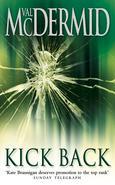
'Kate Brannigan is truly welcome. Hot on one-liners, Chinese food, tabloid papers and Thai boxing, she is refreshingly funny' Daily Mail Kate Brannigan, feisty Manchester-based PI, is back, investigating the bizarre case of the missing conservatories. Before Long she's up to her neck in crooked land deals, mortgage scams, financial chicanery - and murder. But when a favour for a friend puts Kate's own life in danger, bizarre is not the first word she thinks of…

Thumb

0 repins 0 comments

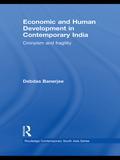
This book deals with issues in economic development in India. It highlights those factors that are indicative of India's emergence in the global economy yet indicates negative "trickle down" effects, such as malnutrition, poverty, bonded labourers, high adult unemployment and the widespread use of child labour. Focusing on structural deficiencies for a steady growth rate, and how to make growth inclusive, the book examines duality in development and the factors standing between national economic prosperity and human development. The author analyses issues concerning international trade, technology, access to food, inequality and poverty, and the "catching up" of developing countries. A novel approach to the analysis of the Indian economy and other developing countries in the 21st century, this book advocates development as a form of governance. With India as a case study, this book provides a solid framework for looking at developing economies which will be useful to policy-makers and to graduate and post-doctoral students and researchers in the areas of development studies and economics, industrialisation and structural change.

Thumb

0 repins 0 comments

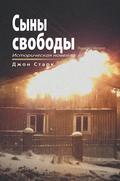
Paul Easton is a Kent State draft dodger and opposed to the Viet Nam war, as many intellectuals were during the sixties. He takes refuge in Canada. While on his way to a teaching job in the interior of British Columbia, his train derails, so he takes a shortcut through the woods to the town of Castlegar. While resting beside a pond, a beautiful creature named Tanya, appears from nowhere - surfacing in the water. The two fall in love. Soon grim realities take over. Ideologically, these two lovers are miles apart. Tanya is a member of a religious cult known as the Sons of Freedom, who live on nearby communal farms. Then there is Gregor, a Freedomite boy, betrothed to Tanya, and jealous of Paul's interest in her. Yet he admires Paul's ideology. Paul takes up his teaching position in Castlegar. It's a small school close to where the Sons of Freedom are encamped. When Tanya finds out that Paul is a school teacher, her perception of him changes. The Freedomites have always taught their own children, and it's mainly religion. The relationship between Tanya and Paul disintegrates. Gregor's jealousy turns into rage. He beats up on Paul, and then gets into a nightclub brawl, finally ending up in jail, and disgracing himself before his elders. Tanya is ordered by the elders to marry Gregor. Later a split occurs within the Freedomite camp. Some decide to return to Russia, others, the zealots, remain. Tanya is one of them. Gregor and his friend Michael Kirov, foil a government plan to auction off vacated Freedomite homes by torching them just before they depart for Russia. The few remaining Freedomites take refuge in the hills, living in tents. Several months later, Tanya gives birth to a son, Vassya, but only Tanya and her sister Natasha know that the real father is Paul. Paul begins to realize he is dealing with fanatics - people who have lost touch with reality. Winter sets in. Conditions at the camp become intolerable. There are food shortages and a lack of medical supplies.

Thumb

0 repins 0 comments

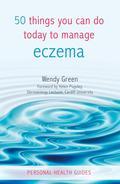
Eczema is an uncomfortable and often distressing skin condition which affects one in five children and one in twelve adults in the UK. Are you one of them? Wendy Green explains the psychological, dietary and hormonal factors that can cause eczema, and offers practical advice and a holistic approach to help you deal with the symptoms, including simple lifestyle and dietary changes and DIY natural therapies. Manage stress to prevent flare-ups Learn how to adapt your home environment Choose beneficial foods and supplements Find helpful organisations and products Care for your skin and manage eczema with this easy-to-follow guide.

Thumb

0 repins 0 comments

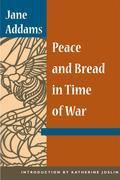
First published in 1922 during the "Red Scare," by which time Jane Addams's pacifist efforts had adversely affected her popularity as an author and social reformer, Peace and Bread in Time of War is Addams's eighth book and the third to deal with her thoughts on pacifism. x000B x000B Addams's unyielding pacifism during the Great War drew criticism from politicians and patriots who deemed her the "most dangerous woman in America." Even those who had embraced her ideals of social reform condemned her outspoken opposition to U.S. entry into World War I or were ambivalent about her peace platforms. Turning away from the details of the war itself, Addams relies on memory and introspection in this autobiographical portrayal of efforts to secure peace during the Great War. "I found myself so increasingly reluctant to interpret the motives of other people that at length I confined all analysis of motives to my own," she writes. Using the narrative technique she described in The Long Road of Women's Memory, an extended musing on the roles of memory and myth in women's lives, Addams also recalls attacks by the press and defends her political ideals. x000B x000B Katherine Joslin's introduction provides additional historical context to Addams's involvement with the Woman's Peace Party, the Women's International League for Peace and Freedom, and her work on Herbert Hoover's campaign to provide relief and food to women and children in war-torn enemy countries. x000B

Thumb

0 repins 0 comments

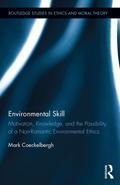
Today it is widely recognized that we face urgent and serious environmental problems and we know much about them, yet we do very little. What explains this lack of motivation and change? Why is it so hard to change our lives? This book addresses this question by means of a philosophical inquiry into the conditions of possibility for environmental change. It discusses how we can become more motivated to do environmental good and what kind of knowledge we need for this, and explores the relations between motivation, knowledge, and modernity. After reviewing a broad range of possible philosophical and psychological responses to environmental apathy and inertia, the author argues for moving away from a modern focus on either detached reason and control (Stoicism and Enlightenment reason) or the natural, the sentiments, and the authentic (Romanticism), both of which make possible disengaging and alienating modes of relating to our environment. Instead he develops the notion of environmental skill: a concept that bridges the gap between knowledge and action, re-interprets environmental virtue, and suggests an environmental ethics centered on experience, know-how and skillful engagement with our environment. The author then explores the implications of this ethics for our lives: it changes the way we think about, and deal with, health, food, animals, energy, climate change, politics, and technology.

Thumb

0 repins 0 comments

Next Page